Overnight Project Management
Why the overnight window is a logistics problem, not a labour problem
Handled Now · 2026-09-18 · 6 min read
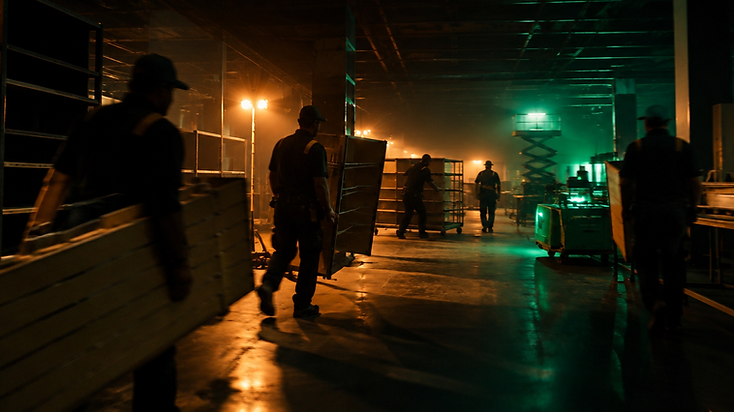
A close-to-open transformation gives you a fixed number of hours and no ability to negotiate with the clock. When one of these projects goes wrong, the post-mortem usually blames the crew. In our experience the crew is rarely the problem.
The window is fixed. The sequence is not.
If four trades need the same aisle in the same three hours, the project will lose time no matter how hard anyone works. The work of an overnight project is done in the plan: what comes out first, what can only move after a fixture is stripped, where the product sits while the floor is rebuilt, and which zones must be finished early because they are on the morning customer path.
Staging is the hidden cost centre
Merchandise and furniture have to live somewhere. If that somewhere is a corridor, you have converted storage space into a bottleneck. We map staging zones during the survey, mark them on the floor, and protect them before the first pallet moves. Trailer staging is scheduled to the hour, not to the night.
Protect the handover, not just the install
A store can be beautifully rebuilt and still open badly, because the last ninety minutes were spent looking for a missing endcap rather than cleaning down and walking the floor. We build a fixed handover block into every schedule and treat it as non-negotiable.
The lesson is unglamorous: the transformation you see at 7:00 AM was designed weeks earlier, on paper, by people arguing about the order of operations.